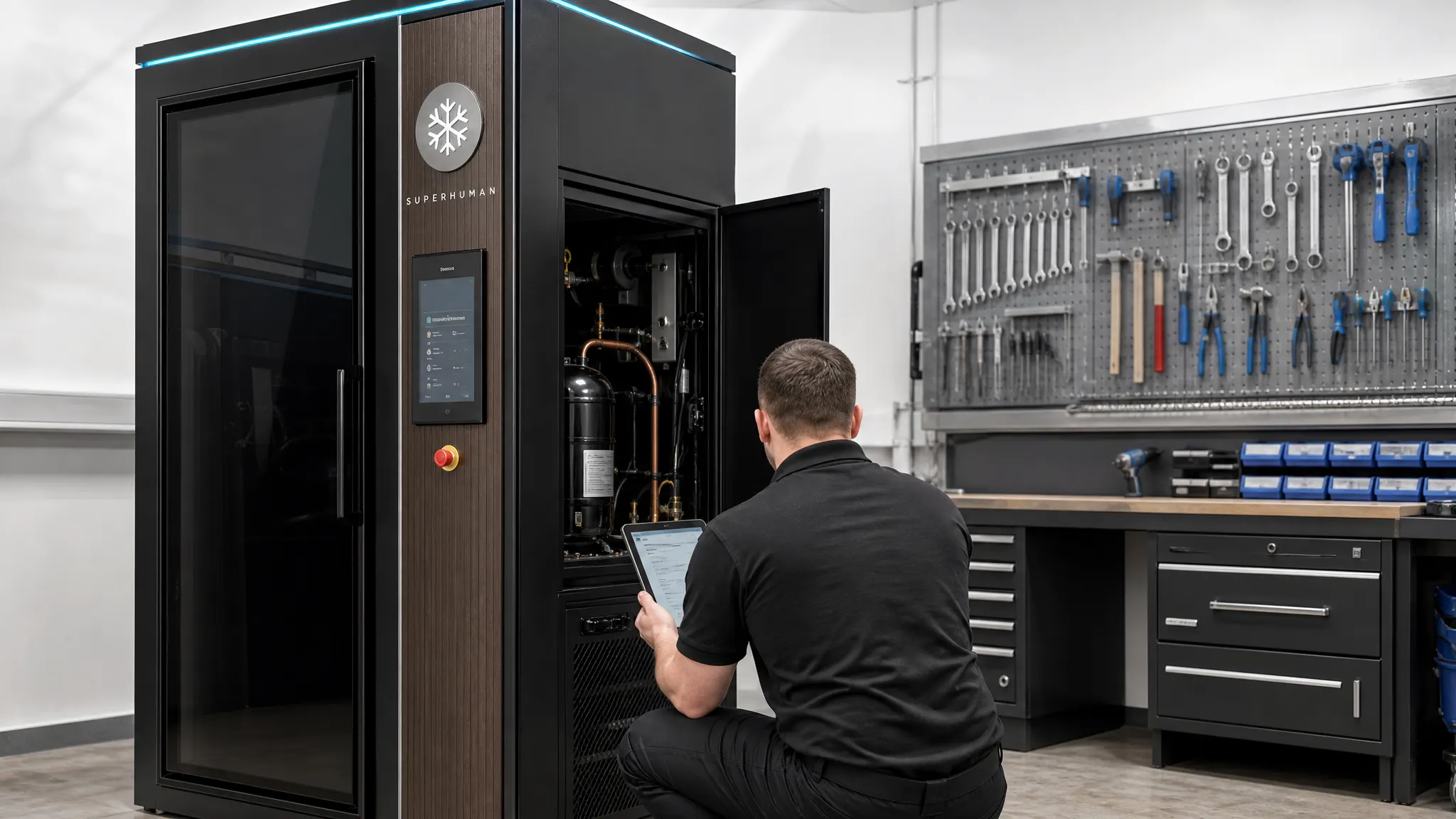
A used cryotherapy chamber typically costs $5,000–65,000, compared with about $25,000–30,000 for a new entry-level electric cryosauna and $65,000–100,000 for a new mid-range walk-in chamber. The price is only part of the deal. Before you buy, check compressor hours, refrigerant, door seals, electronics, software licensing and whether the manufacturer still supports the serial number, then add $2,000–10,000 or more for freight, rigging and recommissioning.
Used cryotherapy chamber prices
Used prices depend mostly on the cooling type, the format and the age.
| Type | Typical used price | New price (market) | Notes |
|---|---|---|---|
| Nitrogen cryosauna, older | $5,000–12,000 | $20,000–30,000 | Common on resale; many from closing studios |
| Nitrogen cryosauna, recent | $12,000–20,000 | $20,000–30,000 | Check nitrogen system and O₂ monitor |
| Electric cryosauna | $12,000–25,000 | $25,000–30,000 | Fewer on the market |
| Electric walk-in, single guest | $30,000–55,000 | $65,000–100,000 | Compressor condition is everything |
| Electric multi-guest / multi-room | $45,000–65,000+ | $150,000–280,000 | Large rigging and reinstall costs |
These are market ranges, not quotes. A low price often reflects a missing service history or an unsupported manufacturer.
What to inspect on any used chamber
Compressor hours and refrigeration
Electric chambers use multi-stage (cascade) refrigeration. The compressors are the most expensive part to replace.
- Ask for compressor run hours from the controller log, or the service record.
- Check the unit reaches its rated temperature, and how long it takes from a cold start. A new electric walk-in reaches −110 °C (−166 °F) in about 90 minutes; much longer points to a weak stage.
- Listen for knocking, short cycling or a changing pitch under load.
- Look for oil around fittings, which can mean a leak.
Refrigerant
- Record the refrigerant types on the data plate. Some older refrigerants are being phased down and cost more to recharge.
- Ask when the system was last charged and whether it has needed top-ups. Repeated top-ups mean a leak.
- Recharging must be done by a certified technician, not the seller.
Door seals and heaters
- Check door gaskets for cracks, tears and flat spots.
- Doors on cold rooms have heater strips so they do not freeze shut. Confirm they work.
- Check the door opens from inside with light pressure. This is a safety item, not a cosmetic one.
- Look for ice build-up around the frame, which means air is leaking.
Electronics and controls
- Power the unit up and run a full session cycle.
- Check the touchscreen, sensors, emergency stop, intercom, camera and oxygen monitor.
- Ask for the wiring and electrical spec. Some units were built for 400 V three-phase and need a converter or rework for US 208 V.
Service history
- Ask for a full service log: dates, parts replaced, who did the work.
- Call the service company if you can.
- No history does not always mean a bad unit, but it should drop the price sharply.
Software and licensing
Some chambers run on software tied to a subscription or a named owner.
- Ask whether the software license transfers to a new owner, and at what cost.
- Check whether remote monitoring or session logging needs a paid plan.
- Confirm the controller is not locked to the old account.
Serial number and manufacturer support
This is the check buyers skip most often.
- Get the serial number and model, and contact the manufacturer directly.
- Ask whether they still support that model with parts and service in your region.
- Ask whether there are open recalls or known issues.
- If the manufacturer has closed, parts may be hard to find. Price that risk in.
Extra checks for nitrogen units
Nitrogen cryosaunas are the most common used units. They are simple, but a few items matter.
- Nitrogen lines and valves. Look for frost, cracked insulation or sticky solenoid valves.
- Evaporator and heater. Check the vapour system reaches temperature evenly.
- Oxygen monitor. Nitrogen displaces oxygen. The room monitor must work and be in calibration. Many sensors need replacing every 2–3 years.
- Floor lift. Most cryosaunas have a height-adjustable floor. Check the motor and the full range.
- Dewar. If a dewar comes with the unit, check its age, pressure relief valve and inspection dates. Many sites lease dewars from their nitrogen supplier instead.
- Running cost. A used nitrogen unit still costs about $3,000–5,000 a month in liquid nitrogen at clinic volume. The cheap purchase can be the expensive choice. See electric vs nitrogen.
Red flags
Walk away, or price in a large discount, if you see:
- No serial number, or a serial the manufacturer cannot find
- No service history and no way to run the unit before purchase
- The seller will not let a technician inspect it
- Repeated refrigerant top-ups in the log
- Door that sticks or does not open easily from inside
- A software license that does not transfer
- Water damage, rust on the frame or signs the unit sat in a humid store
- A manufacturer that no longer exists or no longer supports the model
- A price far below the market range with no clear reason
Freight, rigging and recommissioning costs
A used chamber is not ready to run when it arrives. Budget for:
| Item | Typical range | Notes |
|---|---|---|
| Decommissioning at the seller | $500–2,000 | Safe disconnection, refrigerant checks |
| Freight | $1,000–5,000+ | Distance and size; multi-room units cost more |
| Rigging and positioning | $500–3,000+ | Stairs, tight doors, forklifts |
| Electrical work | $1,000–5,000+ | New circuit, voltage conversion if needed |
| Recommissioning and recharge | $1,500–5,000 | Certified refrigeration technician |
| Staff training | $0–1,500 | Often missing in private sales |
For an electric walk-in, these costs often add $5,000–15,000. For a cryosauna, $2,000–6,000 is more typical. New chambers from us include delivery, installation, commissioning and training in the contiguous US.
Warranty
- Private sales: usually as-is, no warranty.
- Dealer or manufacturer pre-owned: often 3–12 months on parts, sometimes labor.
- New: our Cryo X1 carries a two-year parts and labor warranty.
Also check your insurance. Some insurers ask for proof of service and safety checks on used equipment.
Where to buy a used cryotherapy chamber
- Manufacturer and dealer pre-owned programs. Inspected, often with warranty. Higher price, lowest risk. See our used cryotherapy chambers.
- Equipment marketplaces and classifieds. Wide choice, variable quality. Always inspect.
- Studio closures and auctions. Low prices, usually as-is, fast timelines.
- Operator-to-operator sales. Good when the seller can show logs and let you see the unit running.
When new is the better buy
Compare the real cost, not the sticker price.
| Used electric walk-in (example) | New Cryo X1 | Used nitrogen cryosauna (example) | |
|---|---|---|---|
| Purchase | $45,000 | $69,900 | $10,000 |
| Freight, rigging, recommissioning, training | $5,000–15,000 | Included | $2,000–6,000 |
| Warranty | Usually none | 2 years | Usually none |
| Cooling cost / month | $140–250 | $140–200 | $3,000–5,000 |
| Cooling cost, first year | $1,700–3,000 | $1,700–2,400 | $36,000–60,000 |
The used examples are illustrative. On these numbers:
- A used electric walk-in saves real money only if it is in good condition and well below about $50,000 delivered.
- A cheap used nitrogen cryosauna can cost as much as a new Cryo X1 within one to two years because of nitrogen. Buyers who want head-out without the nitrogen bill should look at electric cryosaunas.
New is usually better when:
- The saving after freight and recommissioning is under about 30%
- You need financing (new equipment is easier to lease; see financing)
- You need guaranteed uptime and a warranty from day one
- The used unit’s manufacturer no longer supports it
Used makes sense when you have a clean, supported unit, a technician’s report and a clear saving. Our cost guide shows full new pricing.
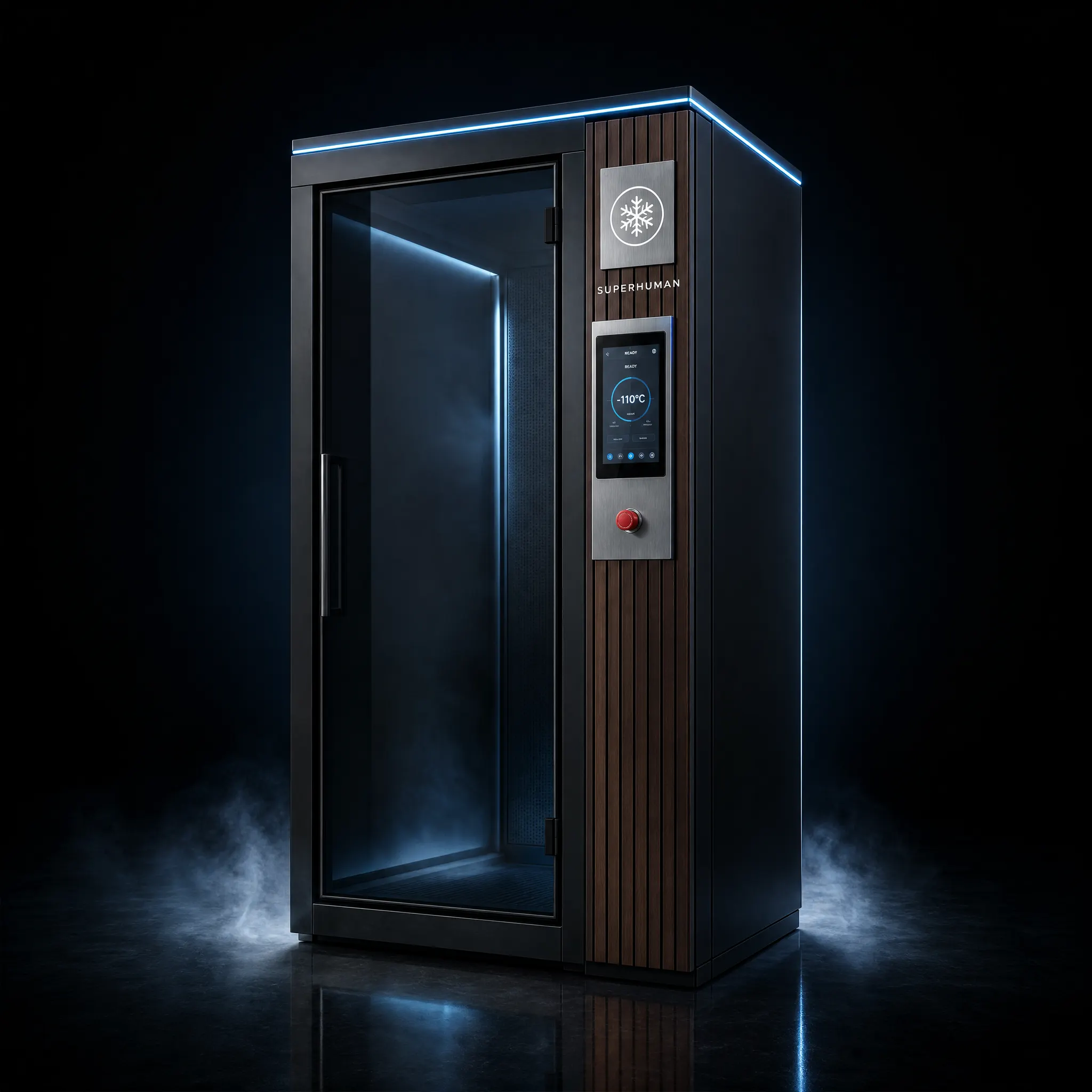
Superhuman Cryo X1
Whole-body cold, no nitrogen bill.
- Guests
- 1
- Cabin air
- −110 °C
- Cooling
- Electric
- Footprint
- 1.6 × 1.4 m
Found a used unit and want a second opinion? Contact us with the model and serial number. We can tell you what to check, and our service team can inspect it.