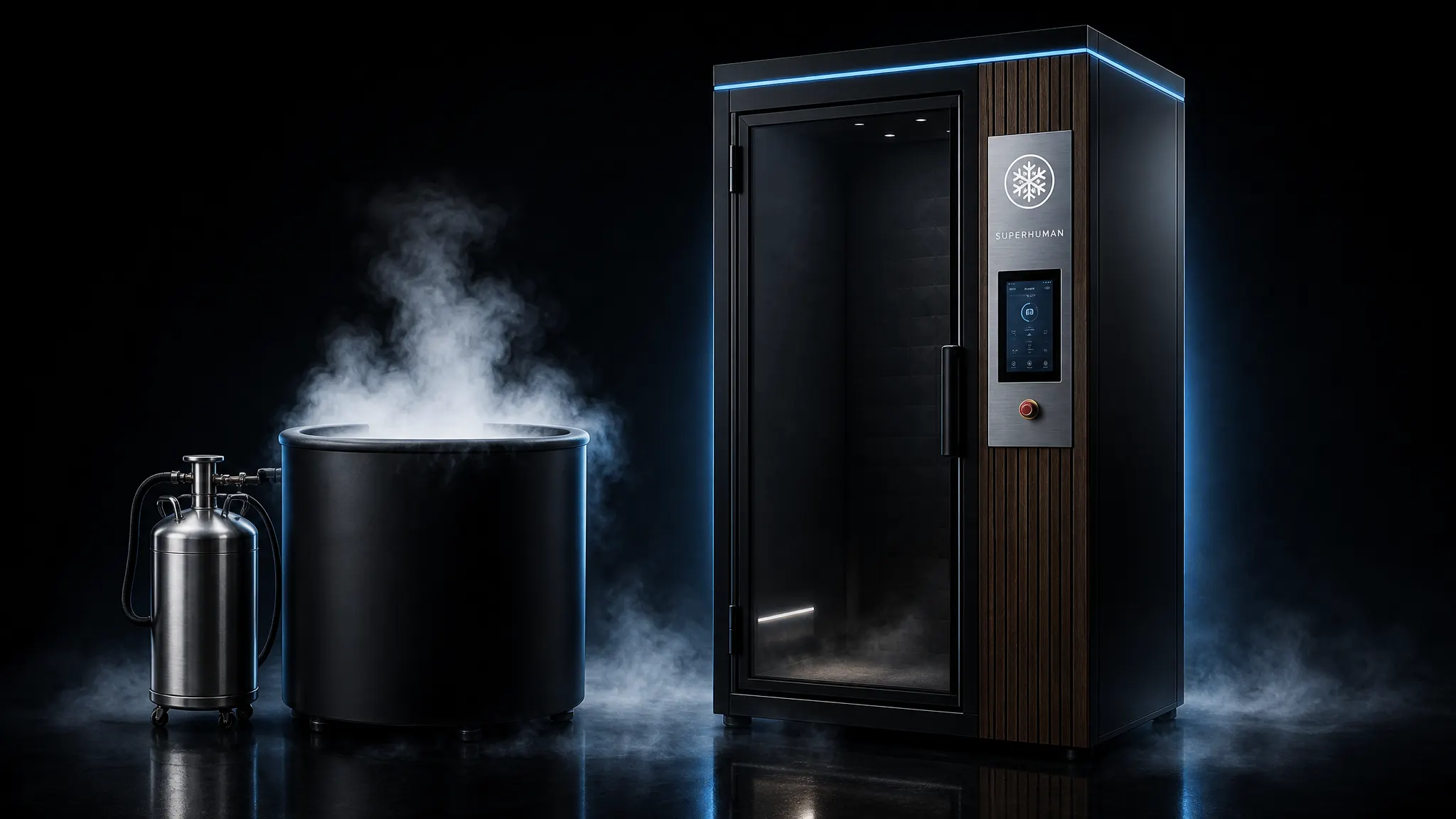
The short answer on electric vs nitrogen cryotherapy: nitrogen is cheaper to buy, electric is cheaper to own. A nitrogen cryosauna costs less upfront (about $20,000–35,000 across the market) but uses about $3,000–5,000 a month in liquid nitrogen. An electric chamber costs more upfront (our walk-in Cryo X1 is $69,900) but runs for about $140–200 a month in electricity. For a business running sessions every day, electric usually costs less within the first one to two years.
Our X1 is electric, so we have a stake in this question. This guide still tries to be fair to each. Nitrogen still makes sense for some operators.
How each one makes the cold
Nitrogen cryosaunas use liquid nitrogen from a storage tank (a dewar) next to the unit. The liquid turns to very cold vapour, which is fed into the cabin. The guest stands inside with their head above the rim. The cold comes in, the vapour vents out, and you refill the tank.
Electric units use a cascade refrigeration system, similar in principle to a very powerful commercial freezer. Two or more refrigeration stages chill the cabin air and keep circulating it. Nothing is consumed except electricity. Electric technology covers both cryosaunas and walk-in whole-body chambers like the Cryo X1.
5-year total cost of ownership
This is the table that decides most purchases. Figures use market prices for a nitrogen cryosauna, our published X1 price and typical running costs.
| Cost over 5 years | Nitrogen cryosauna (market) | Cryo X1 (electric walk-in) |
|---|---|---|
| Purchase price | $20,000–35,000 | $69,900 installed |
| Room prep | $1,000–6,000 (ventilation, O₂ monitor area, dewar storage) | $0–8,000 (three-phase circuit) |
| Cooling | $180,000–300,000 (liquid nitrogen) | $8,400–12,000 (electricity) |
| Maintenance after warranty (yrs 3–5) | $2,000–4,000 | $4,500–10,000 |
| Estimated 5-year total | $203,000–345,000 | $82,800–99,900 |
| Guests per session | 1, head out | 1, head in |
Estimates only. Nitrogen varies most, with local supplier price, session count and boil-off. Electricity varies with your local rate.
Two things stand out. First, the cheapest unit to buy is by far the most expensive to own. Second, even the walk-in X1, which costs two to three times as much to buy, comes in at well under half of the nitrogen unit’s 5-year cost. The operating cost guide runs the same comparison with revenue included: in an illustrative example, the X1 overtakes a nitrogen cryosauna in cumulative profit after about 14 months.
Temperature and guest experience
| Nitrogen cryosauna | Electric cryosauna | Electric walk-in chamber | |
|---|---|---|---|
| Cabin temperature | −120 to −140 °C (−184 to −220 °F) vapour | Typically −85 to −90 °C (−121 to −130 °F) | Down to −110 °C (−166 °F) on the X1 |
| Head position | Outside | Outside | Inside |
| Air | Cold nitrogen vapour, can be visible mist | Dry, circulated cold air | Dry, circulated cold air |
| Session length | 2–3 minutes | 2–3 minutes | 2–3 minutes |
| Ready from cold start | Minutes | Typically under an hour | ≈90 minutes (X1) |
Nitrogen vapour reads colder on the display. But the numbers are not directly comparable. A nitrogen cryosauna is a small, turbulent cabin with the head outside, and the temperature near the skin varies with the flow of vapour. An electric walk-in chamber holds a stable, dry cabin at −110 °C with the whole body inside. Guests often describe electric chamber sessions as more even. Many sports and recovery buyers ask for head-in, whole-body sessions by name, and that is the X1’s format.
Some guests prefer the nitrogen cryosauna experience: the visible vapour, face-to-face contact with the operator, and a head that stays in room air. It is a matter of taste, and your guests will tell you.
Whichever you pick, sell it as a wellness service. Whole-body cryotherapy is not FDA-cleared to treat any medical condition, and research on its effects is ongoing and mixed.
Safety: oxygen, ventilation and handling
Both types are cold enough to injure skin if protocols are ignored, so both need dry clothing, gloves, socks, a session timer and a trained operator present. The difference is gas.
Nitrogen: oxygen displacement
Nitrogen gas is colourless and odourless. In an enclosed space it displaces oxygen, and low-oxygen air gives no warning before it causes harm. That is the reason nitrogen cryosaunas are head-out, and why a nitrogen room needs:
- Ventilation sized for the unit and the room, so vented vapour is cleared.
- A wall-mounted oxygen monitor with an audible alarm, positioned low where cold nitrogen collects.
- Safe dewar handling. Staff move and connect heavy cryogenic tanks and need training, face and hand protection, and a clear storage area.
- Written procedures for leaks, alarms and deliveries.
Whoever supplies your unit should specify ventilation and the O₂ monitor before delivery and train your staff on nitrogen safety.
Electric: no stored gas
Electric units use refrigerant in a sealed system and blow cold air, not nitrogen. There is no tank on site and no vented vapour. The X1 still includes an oxygen monitor, an emergency stop, doors that open from inside at all times and an operator intercom. More detail in cryotherapy chamber safety.
Daily operations
| Task | Nitrogen | Electric |
|---|---|---|
| Supply | Scheduled nitrogen deliveries, weekly or more at busy sites | None |
| Storage | Dewar next to the unit, spare dewar space | None |
| Boil-off | Nitrogen lost daily in storage, even on quiet days | Not applicable |
| Standby | Off between sessions, ready in minutes | Kept at temperature through the day, standby mode overnight |
| Running out | A missed delivery means no sessions | No supply risk; depends on power |
| Staff tasks | Tank swaps, level checks, alarm tests | Defrost cycles, filter checks |
Deliveries are the hidden workload of nitrogen. Someone has to receive them, swap tanks and watch levels. If a delivery is late on a busy Saturday, you cancel bookings.
Boil-off means nitrogen costs money even when you are closed. A dewar that sits over a long weekend still loses product.
Standby favours nitrogen for occasional use. A nitrogen cryosauna is ready in minutes, so it suits a site that runs a few sessions a week. An electric chamber takes up to about 90 minutes to reach temperature from cold, so operators keep it running through opening hours. That is already counted in the electricity figures.
Who should pick nitrogen
Nitrogen is the right call for some businesses. Be honest with yourself about which group you are in:
- Low or seasonal volume. If you expect a few sessions a day or fewer, or you only run cryo part of the year, the nitrogen bill stays at the lower end and the quick start-up suits occasional use.
- Lowest possible upfront cost. If capital is the hard limit and you want to test demand, a nitrogen cryosauna in the $20,000–35,000 range is the cheapest way in.
- An existing nitrogen supplier. Clinics, labs and some med spas already buy liquid nitrogen at good rates. Adding a cryosauna to an existing contract changes the math.
Who should pick electric
- Daily volume. Past roughly 5–7 sessions a day, the saving on nitrogen usually covers the higher purchase price within one to two years.
- Head-in, whole-body sessions. If your guests want the full chamber experience, the X1 is on sale now.
- No gas on site. Gyms, hotels and shared buildings often prefer not to store cryogenic tanks or manage delivery schedules.
- Predictable costs. A flat electricity line is easier to budget, finance and insure than a variable nitrogen bill.
- Spa-style entry price without nitrogen. Electric cryosaunas start around $25,000–30,000 on the market. See our cryosaunas buyer guide.
The bottom line
If you will run cryo every day, electric almost always wins on total cost of ownership. If you will run it occasionally, already have nitrogen, or need the lowest possible purchase price, nitrogen is a reasonable choice, provided you budget the monthly bill and set up the room properly.
For all purchase prices, see cryotherapy chamber cost. To compare formats, read cryosauna vs cryotherapy chamber. Or browse electric cryotherapy chambers and our cryosaunas guide.
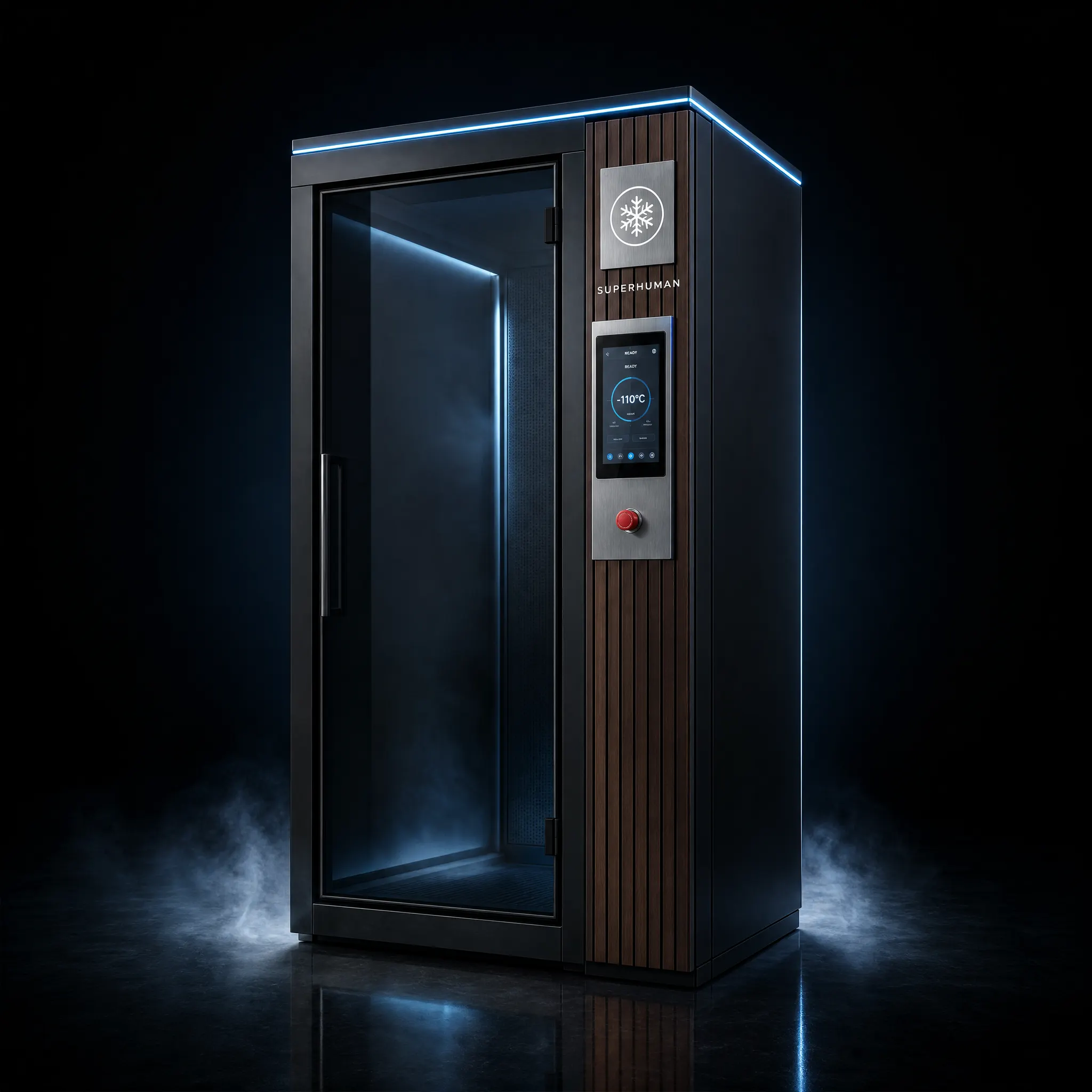
Superhuman Cryo X1
Whole-body cold, no nitrogen bill.
- Guests
- 1
- Cabin air
- −110 °C
- Cooling
- Electric
- Footprint
- 1.6 × 1.4 m