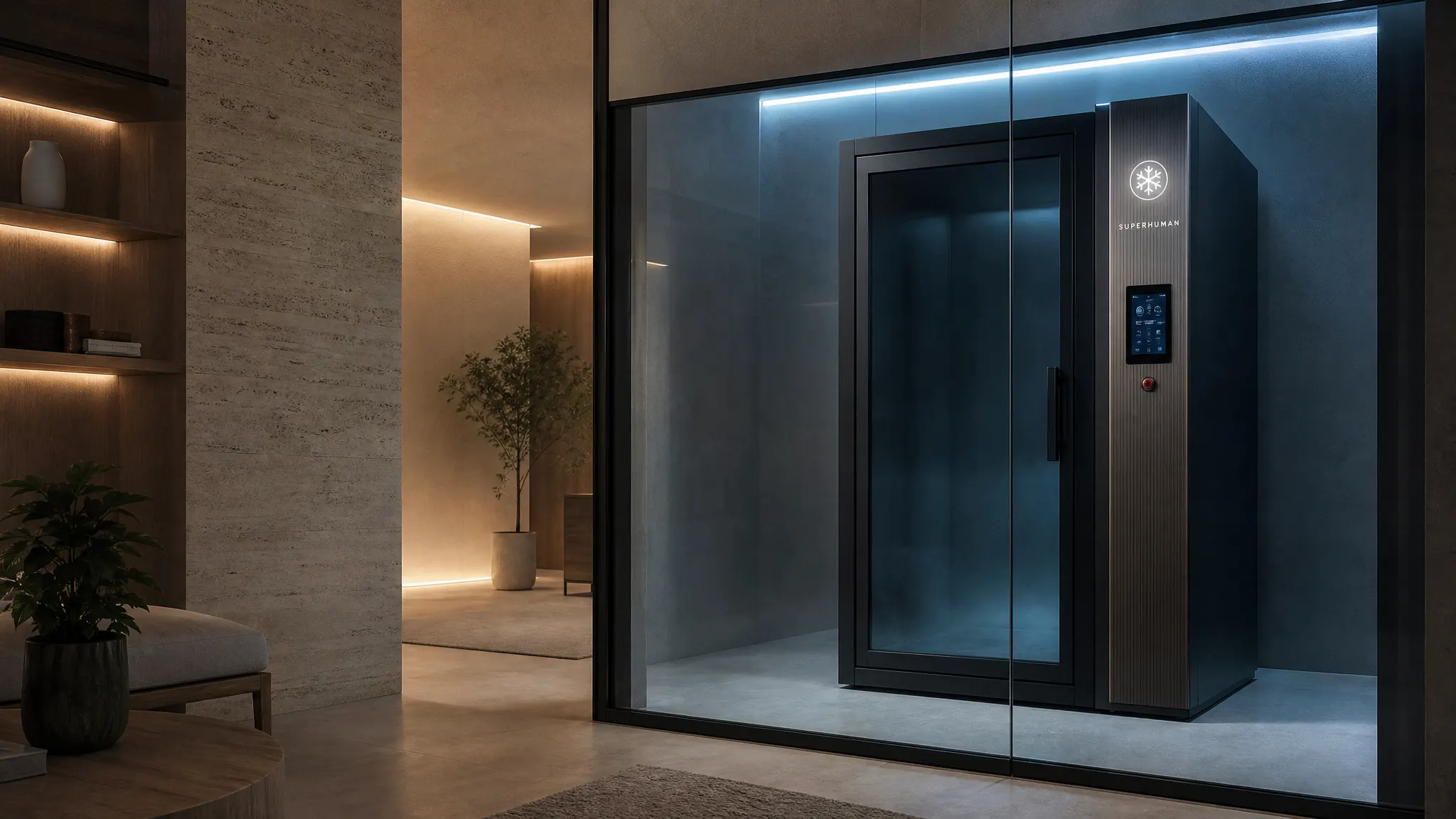
A cryotherapy chamber for a wellness center is usually an electric, head-in chamber that runs 2–3 minute sessions at −110 °C (−166 °F), sold as one step in a longer wellness protocol. Our Cryo X1 is built for this: one guest, whole body, head in, $69,900, and about $140–200 a month to run.
How wellness centers use cryo
Wellness and longevity centers sell routines, not single services. A guest books a 60–90 minute visit and moves through several stations. Cryo is short, so it slots in anywhere in that flow.
That has three practical effects:
- Throughput matters less than reliability. The chamber has to be ready every time a protocol reaches it. Electric chambers stay cold all day with no nitrogen tank to run out.
- Guest comfort matters more. Many guests are not athletes. A calm attendant, a clear briefing and a door that opens from inside at all times help first-timers.
- Price is part of a bundle. Cryo is rarely the line item guests compare; the membership is.
Stacking cryo with other modalities
These are the combinations we see most often in wellness and longevity centers. The order is a business and guest-flow decision. Research on combining modalities is limited, so present these as routines, not medical protocols.
| Station | Typical time | How centers pair it with cryo |
|---|---|---|
| Cryotherapy | 2–3 min | Anchor of the visit, often first or last |
| Red light panel or bed | 10–20 min | After cryo, while the guest warms up |
| Compression boots | 20–30 min | After cryo, seated and relaxed |
| Infrared sauna | 20–40 min | Contrast routine: cold, then heat |
| Hyperbaric chamber | 60–90 min | Separate booking or premium tier |
Cryo next to long sessions
Many longevity centers pair cryo with longer modalities such as hyperbaric or infrared sauna. When you plan the floor, put the cryo room where its electrical supply and heat output do not compete with other equipment.
Hyperbaric sessions are long, so guests often do cryo or red light on the same visit. That makes the visit worth the drive and raises spend per guest.
Which model fits a wellness center
| Model | Type | Guests | Price | Room | Running cost / mo |
|---|---|---|---|---|---|
| Cryo X1 | Electric walk-in, head in | 1 | $69,900 | 2.0 × 2.0 m | $140–200 |
Cryo X1 is the default, and it is available now. Whole-body, head in, −110 °C on electricity alone, fits a single room. It is ready every time a protocol reaches it, with no tank to run out.
Centers with busy memberships or couples bookings can add a second X1 as demand grows. If many of your guests prefer to keep their head in room air, read cryosauna vs chamber before you choose a format.
We rarely recommend nitrogen for wellness centers. Nitrogen cryosaunas are cheaper to buy, but nitrogen costs about $3,000–5,000 a month and adds tank handling and oxygen monitoring. See electric vs nitrogen.
Membership design
Memberships are where wellness centers make cryo pay. Some structures that work:
| Membership | Example price range | What is included |
|---|---|---|
| Cold and light | $150–250 / mo | 8 cryo + 8 red light sessions |
| Recovery | $250–400 / mo | Unlimited cryo, compression, sauna |
| Longevity | $500–1,000+ / mo | All modalities, including hyperbaric sessions |
| Intro pack | $99–149 | 3 visits, one-time, to convert new guests |
These are illustrative ranges. Set a daily cap on unlimited plans and track usage for the first three months, then adjust.
A few design rules:
- Price the bundle, not the minutes. Guests value the routine and the space.
- Keep a single-session price visible so the membership looks like good value.
- Book protocols as one slot in your scheduling software so rooms do not collide.
Wording: stay on the wellness side
Wellness centers often sit next to clinical services, so wording needs care.
Safe phrases: “cold session”, “part of your recovery routine”, “a wellness experience”. Every guest completes a screening questionnaire and waiver first. See our safety guide for common exclusions.
Room planning and install
- Room: the X1 needs a 2 × 2 m (6.5 × 6.5 ft) room with a 2.5 m ceiling.
- Power: a dedicated three-phase circuit, 208–240 V or 400 V depending on your region.
- Changing: a private changing space close to the cryo room.
Electric chambers reject heat into the room, so plan ventilation, especially if the cryo room sits next to a sauna. Full details are in room and power requirements.
Delivery, installation, commissioning and staff training are included in the contiguous US, with a two-year parts and labor warranty. Leasing for the X1 runs about $1,450 a month; see financing.
Illustrative revenue
Round numbers, not a forecast.
Illustrative example: wellness center with a Cryo X1
- 70 members on a $200 / month cold-and-light plan, with cryo worth about a third of the plan value = about $4,700
- 120 single cryo sessions a month at $60 = $7,200
- Cryo-related revenue: about $11,900 a month
- Lease about $1,450 a month; electricity $140–200
Market-wide, operators report $15,000–25,000 a month in cryo revenue and a payback of 6–14 months. The operating cost guide covers staff and maintenance.
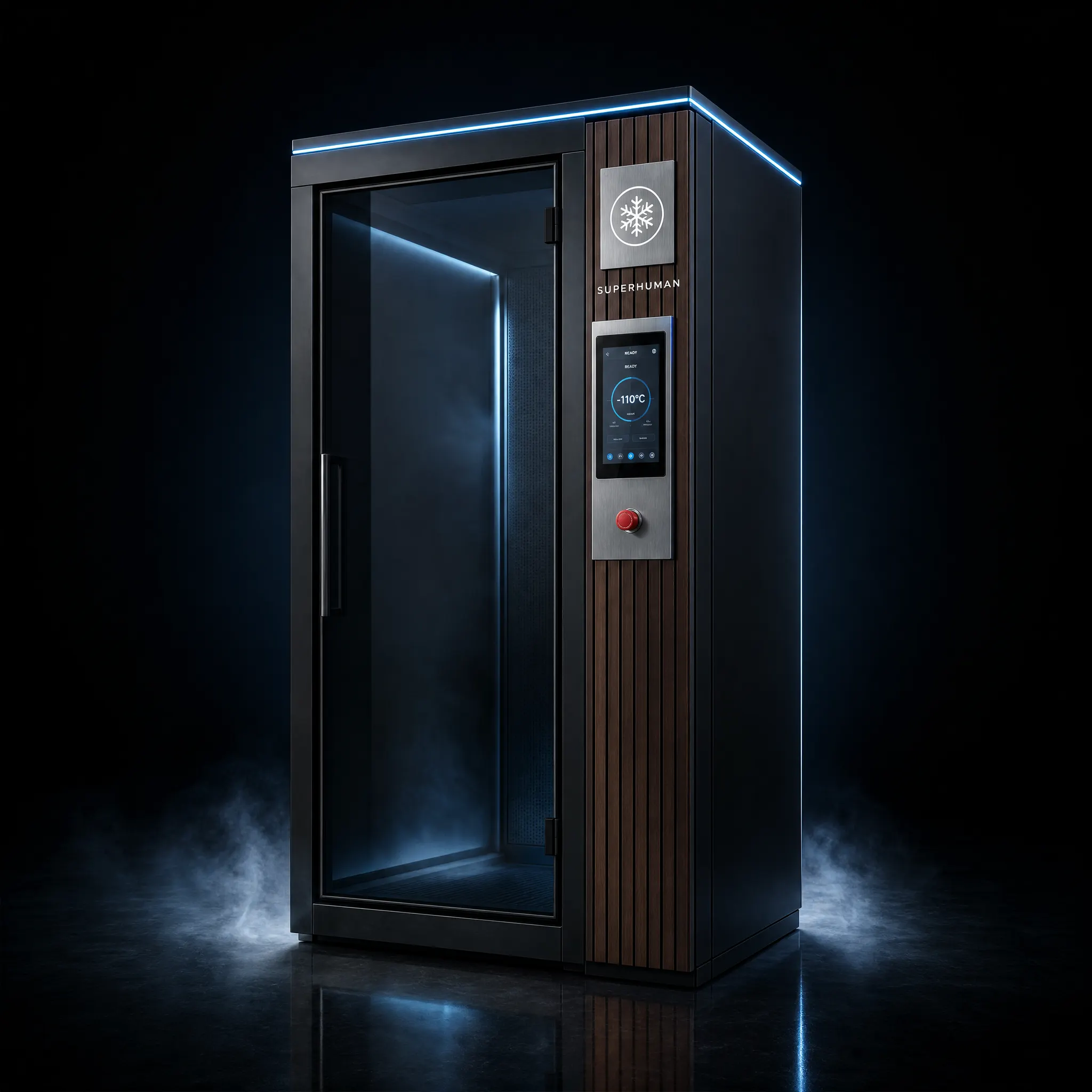
Superhuman Cryo X1
Whole-body cold, no nitrogen bill.
- Guests
- 1
- Cabin air
- −110 °C
- Cooling
- Electric
- Footprint
- 1.6 × 1.4 m
Planning a multi-modality center? Contact us with your floor plan. We will plan the cryo room around the rest of your equipment.